
Newsletter of the Shell Club of Sydney
NSW Branch, The Malacological Society of Australasia Limited ACN 067 894 848
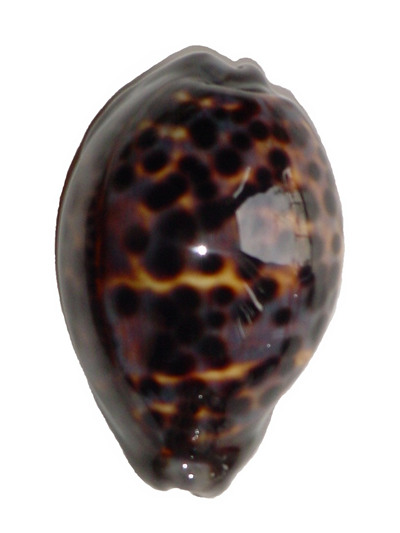
Mature Cypraea tigris Northern NSW 2004 98.4mm
The shell colouring is quite dark, except for the three striking and unusual wavy yellow lines across the dorsum.
See below for more details of this and other melanistic tiger cowries observed at the same location
Northern NSW Shell Field Trip January 2004
Steve Dean (Sheller Editor)
For the last week of the school holidays three generations of Deans, Keith, Steve and Peter (age 11) went on a field trip to Northern NSW to look at a rock platforms. We went to a different platform each daytime low tide. Between low tides we filled in time with fishing, swimming and sight seeing. We stayed in my camper van, usually in camping grounds. All three
of us are keen shell collectors, and the older two wanted to show Peter some of the spots where
we collected when we were younger 30 - 40 years ago, and to see if the same sorts of shells were still present.
The good news is that even though we were there at the very end of the six week summer holiday period when all
rock platforms had been picked over by others, shells were as abundant as they were 30 years ago. As in Sydney there are a lot more
Turbo imperialis on the rock platforms than there used to be. We visited David Tarrant who reported that in the dead shell rubble area at Woolgoolga one teenage girl had collected over 30 cowries in good condition almost every day of her holiday there. David therefore took his children and us to a less known rubble area to look for washed in dead shells.
The water between Coffs Harbour Main Beach and its Island was too deep for the holidaymakers to wade out. However on the last day of the holidays, just before dusk, there was no waves or wind and a very low tide, so we braved it and waded out for a look for 30 minutes. In the middle of one large rock pool above high tide (water stays hot in this pool) there
was a
Tridacna squamosa (Clam) over 210mm in length:- attached to a rock and very visible in the middle of the pool 0.5m deep. I felt around it and it had no growths on it and quite large flutes on the ribs. (If anyone wants to view it I can provide details of the location of the pool where it is growing).
We saw one dead Nodopelagia brazieri at Woolgoolga, and as we headed north we observed many more live and dead, some with very dark colouring. When looking for shells different people are good at spotting different things. Pete
spotted more than 80% of these, no mater how hard I tried to find them.
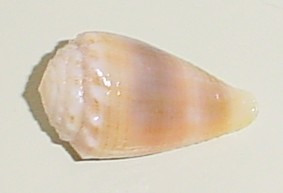
We saw a few species of cone, one of which I cannot identify. Once
someone identifies it I will alter this web page. To help anyone who may
be able to let me know what it is here are some comments: The step in
the spire at the suture of the last whorl may just be unusual growth as
sometimes happens with cones. The spiral lines are groves, otherwise the
outer shell is smooth (no granulose bumps or spiral chords). There are
also fine spiral brown coloured lines associated with these. There is no
darkening at the anterior end, inside or out. The brown blotches between
each shoulder turret are actually made up of several fine radiating
lines running only the width of the turret at the shoulder. The dark
band on the outer shell is actually colouration on the inside of the
shell. (25.7mm)
 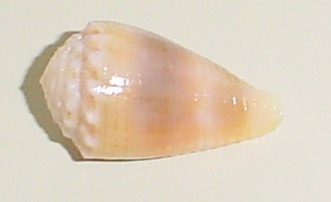
The Conus Papiliferus below was also more elongated than
its Sydney counterparts and had much straighter sides and sharper shoulder.
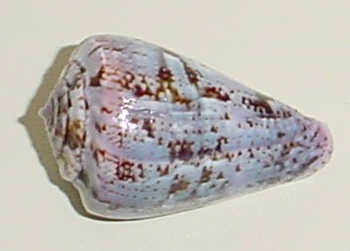
Keith and Pete were very pleased to observe Conus ebraeus both alive and dead. They have not
spotted these before.
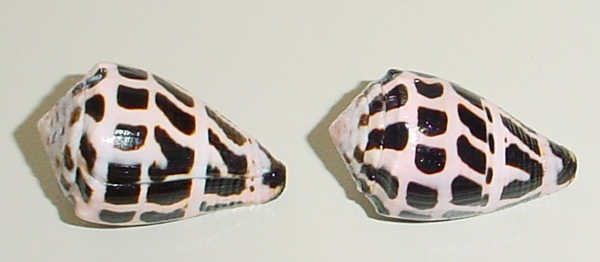
Sundials Heliacus variegates were still to be found living in the same pool on Sawtell Island where they have previously
been observed.
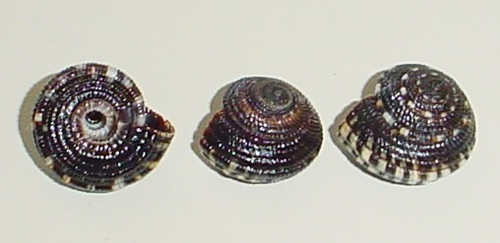
At Angourie we found Natica gualtieriana in the sand. I have not seen these in NSW before.
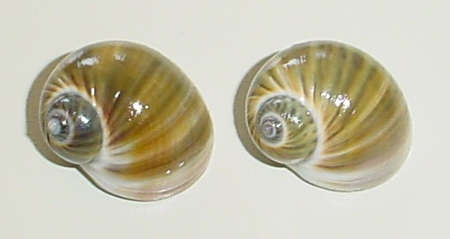
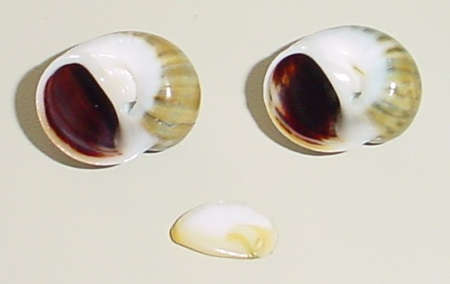
The Nassarius glans particeps from Northern NSW has quite different patterning to the Sydney form.
These wash up dead on the beaches in quantity at Woolgoolga, the same as in Sydney.
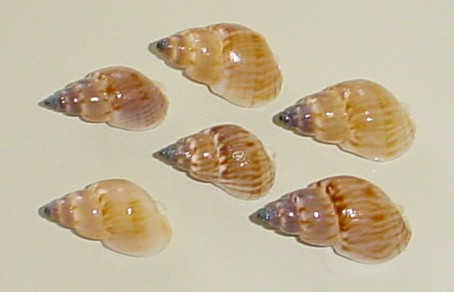
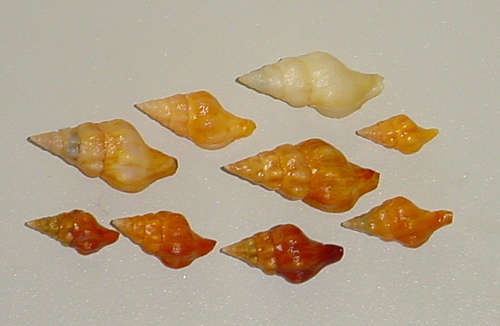
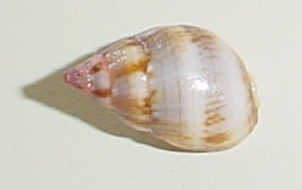
I have yet to identify the Nassarius species below (15.6mm). It is not particeps or spiratus.
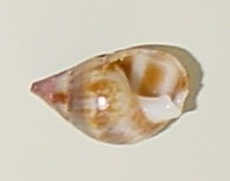 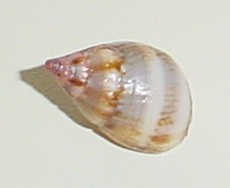
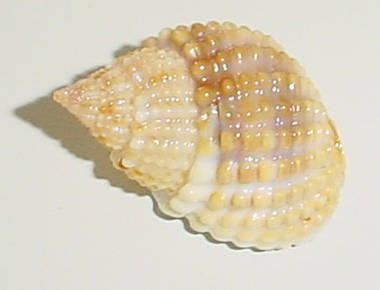
This Nassarius conoidalis was in gem condition even though it had
a hermit crab.
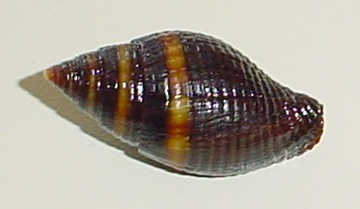
This Mitra aurantia was living on an exposed part of a rock platform amongst shell rubble and small shells with hermit crabs.
We saw several species of cowrie. On a rock platform near Yamba our best find was a colony of
Cypraea tigris. They were fully mature, gem, and had extremely dark dorsums, one being
almost completely black over the top of the dorsum.
Photos of melanistic cowries do not show the pattern very well so I used a flash up close, which artificially
lightened the pictures below but at least makes the patterns visible. I also included up to three conventional Queensland tiger cowries in some of the shots for colour and lightness comparison. As can be seen the flash makes them look pale as well.
All five Yamba specimens are white underneath per normal Cypraea tigris. On the dorsum the base colour
is yellow. They then have a grey layer over most of this, and then very dark spots on top of that. This makes for interesting overall colouration. In the
two pictures below the five dark shells are the Yamba cowries.
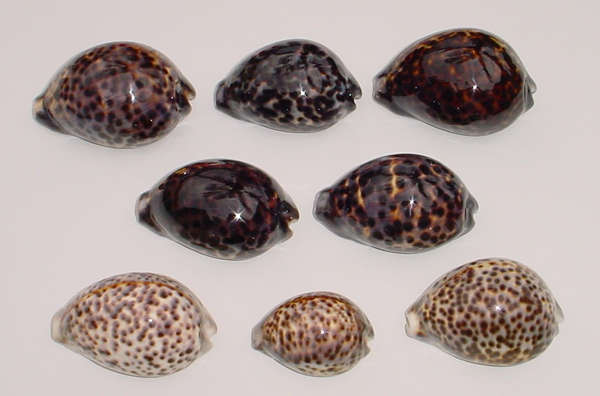
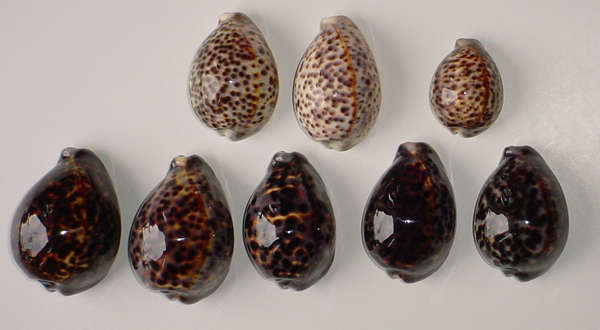
For purposes of the descriptions beolw the bottom five in this
picture are numbered #1 to #5
Two of the five Yamba specimens pictured (#2 105.9mm and #5 94.5mm) are only slightly darker than some Great Barrier Reef tiger cowries although the colouring is different.
However the other three Yamba shells are stunning specimens:
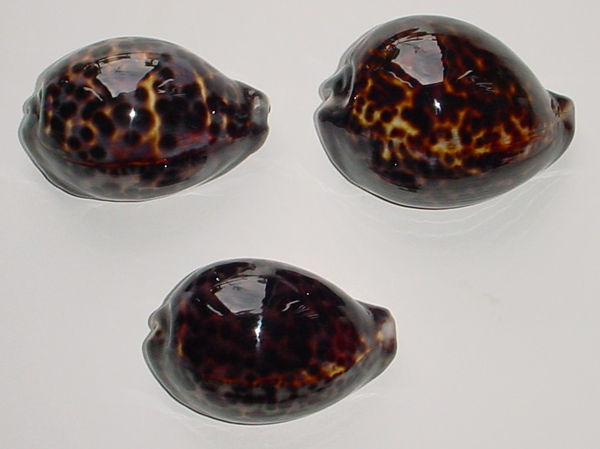
#3 from the group picture has a unique pattern of three yellow wavy stripes (front cover) This is caused by the grey layer running in 5 separate bands across the shell with the yellow showing through between, then the spots on top making the stripes look wavy. (The pictures below
are lighter than the actual shell so you can see the grey bands)
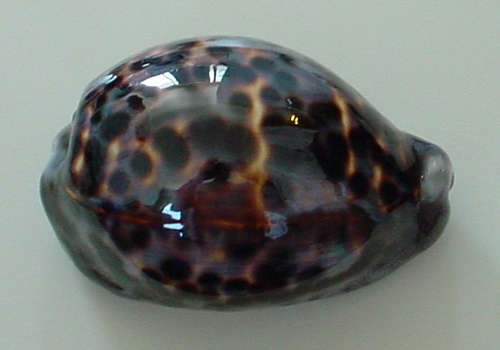
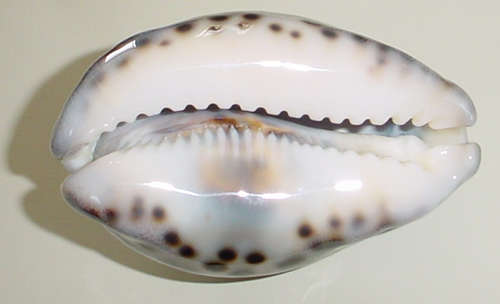
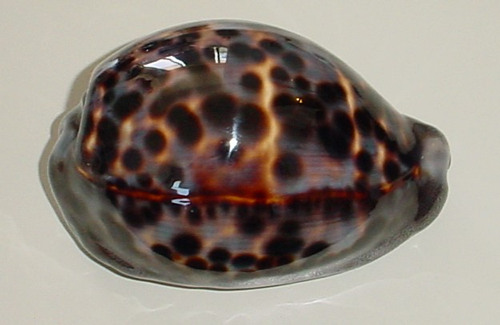
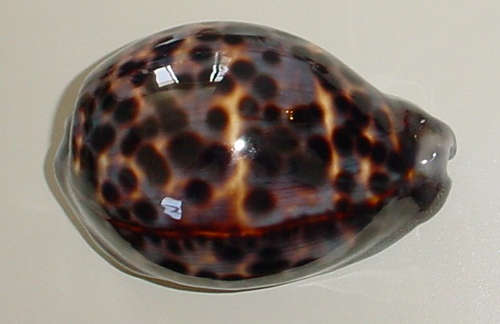
#1 is quite large (104.9mm) and spectacularly dark all over (the picture cannot do justice to its rich golden brown colouring)
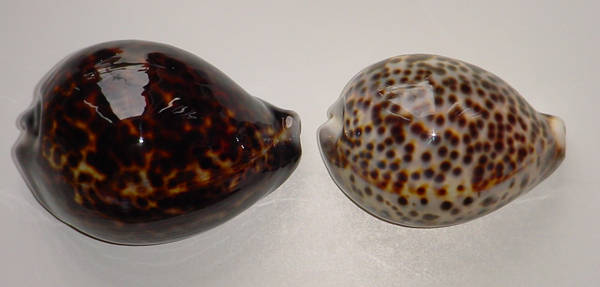
#4 is smaller (98.6mm) but is almost black over the top of the dorsum.
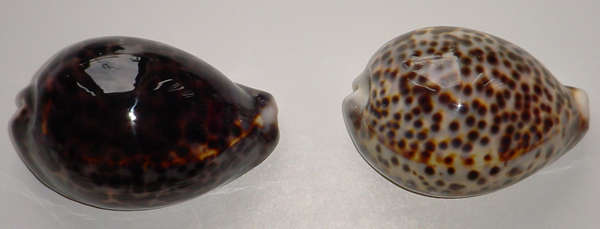
TRIPHORIDAE - New South Wales
John Franklin
How many of us over the years have acquired minute shells where the aperture is located on the left-hand side?
Further, how many of us have put these sinistral shells in a box with a label describing the family name "Triphoroidea" and the locality but with no other distinguishing features?
Once having acquired the shell the difficulty has been for the researcher/collector to differentiate between each species. Some reasons for this difficulty are that the shells are small, there is a large number of species and the difference between each shell is superficially slight. No doubt these problems are not new to minute shell research generally, but members of the Triphoridae family present the investigator with complexity.
In the historic background early researchers dealing with this family of shells from New South Wales such as Tenison-Woods 1876, Henn-Brazier 1894, Hedley 1903 and Laseron 1954 had little better than a large magnifying glass with which to identify species and allot them to their respective genus. In the early days it would have been almost impossible to determine protoconch characteristics.
It was to be many years later with the adoption of the scanning electron microscope/micrograph SEM that scientists have been able to make a more accurate determination of species.
In 1983 Marshall revised the family and defined a specific region of study, being south of Geraldton Western Australia and south of the New South Wales border with Queensland.
Marshall found that triphorid fauna distribution and larval development differ between east and west of Bass Strait. As between northern tropical and southern warm temperate faunas, species that are located in Queensland are rarely found in New South Wales. The fact that some Queensland species are located in New South Wales can be accounted for in the transportation of larvae by the south bound water masses.
In attempting to determine species particularly for this family and in general other minute shell families it is essential to look for the following shell characteristics:-
(i) colour pattern, shape, size, teleoconch, protoconch, operculum and radula;
(ii) it cannot be too strongly emphasised that the key to classification of triphorids is the study of the protoconch. Therefore worn, drilled or broken shells are almost useless for study.
In recent times there has been a rekindling of interest in triphorids from New South Wales, which has promoted further research. Such interest has been triggered by the relative frequency of species being available in shell sand, increasing knowledge and awareness of what to look for and the availability of sophisticated equipment as an aid in species determination. Clearly distribution analysis shows that triphorids exist almost the entire length of the New South Wales coastline from Eden to Tweed Heads.
A research monitoring program has now been developed and emanating from this program will be an increased knowledge of the numerous species that constitute the family, and a better understanding of the location/habitat of the taxa generally.
What follows are tables of the general characteristics of triphorids and a distribution analysis of those shells particularly in New South Wales but also including the other states of Australia.
References:
Allan, T., 1950 Australian shells, Georgian House, Melbourne at pp. 90-91
Laseron, C., 1954 Rec. Aust. mus., 3, pp. 139-158, figs. 1-30 and Laseron, 1958, Aust. J. Mar. Freshw. Res., 9, pp. 569-658, figs 1-255.
Iredale, T. and McMichael, D.F., 1962 A reference list of the marine mollusca of New South Wales, The Australian Museum Sydney at pp. 46-47.
Marshall, B.A., 1983 A revision of the recent Triphoridae of Southern Australia (mollusca: gastropoda) Records of the Australian Museum, Supplement 2, 119 pp.
Superfamily TRIPHOROIDEA
Family TRIPHORIDAE
Shell Characteristics
|
SINISTRALITY
|
DEXTRALITY
|
NUMBERS
|
HABITAT
|
ANATOMICAL
LAYOUT
|
SPECIES
IDENTIFIC-ATION
|
|
Definitions:
(a)
Of or pertaining to the left side.
(b)
As a conse-quence of the sinistral coiling of the shell the
aperture is always “on the left side of the central axis”
Allan 1953
(c)
“In other words most triphorids are effectively mirror
images of their dextral counterparts and most other dextral
gastropods in shell coiling direction and anatomical layout.”
Marshall 1983
(d)
Members of the Subfamily Triphorinae are sinistral.
|
Definitions:
(a)
Coiling from the left to the right.
(b)
Pertaining to or on the right hand side.
(c)
Opposed to sinistral.
(d)
Members of the Subfamilies Adelacerith-iinae and Metaxiinae
are dextral.
|
In excess of 1,000 species and probably more.
|
(a)
Lives on sponges, eg porifera.
(b)
Occur in both arctic and tropical seas (worldwide).
(c)
“The family has its maximum diversity on clean, hard
substrates in tropical and temperate seas, from the inter-tidal
zone to about 200m.” Marshall 1983.
|
(a)
Triphorids “are characterised by a combin-ation of
cerithioid shape and very distinctive radular morphology and
anatomy, notably the presence of a peculiar glandular pouch that
opens into the posterior oesophagus.” Marshall, 1983.
|
(a)
Both protoconch and radular characteristics are extremely
important indicators.
(b)
Other aides to determination are colour/ patterns,
teleconch, facies, size, shape and operculum.
|
Superfamily TRIPHOROIDEA
Family TRIPHORIDAE
DISTRIBUTION ANALYSIS
|
|
|
GENERAL
COMMENTS
|
NSW
|
VIC
|
QLD
|
NT
|
WA
|
SA
|
TAS
|
|
|
|
|
|
|
|
|
|
|
Subfamily
METAXIINAE Marshall, 1977
|
|
|
|
|
|
|
|
|
|
|
|
|
|
|
|
|
|
Genus
Metaxia Monterosato
|
|
|
|
|
|
|
|
|
Metaxia
fuscoapicata
|
Thiele, 1930
|
|
|
|
|
|
ü
|
|
|
|
Metaxia
protolineata
|
(Laseron)
|
Manly Beach;
shell sand, NSW
Cape Byron NSW
|
ü
|
|
|
|
|
|
|
|
|
|
|
|
|
|
|
|
|
|
|
Genus
Seilarex Iredale
|
|
|
|
|
|
|
|
|
Seilarex
turritelliformis
|
(Angus, 1877)
|
Port Jackson,
Sydney
Sow & Pigs
Reef, Sydney
Twofold Bay,
NSW
|
ü
|
ü
|
|
|
|
|
|
|
Seilarex
verconis
|
Cotton, 1951
|
|
|
|
ü
|
ü
|
ü
|
ü
|
|
|
|
|
|
|
|
|
|
|
|
|
|
Subfamily
TRIPHORINAE Gray, 1847
|
|
|
|
|
|
|
|
|
|
|
|
|
|
|
|
|
|
Genus
Inella Bayle
|
|
|
|
|
|
|
|
|
Inella
obliqua
|
(May, 1915)
|
|
|
|
|
|
ü
|
ü
|
ü
|
|
Inella
spina
|
(Verco, 1909)
|
|
|
|
|
|
|
ü
|
|
|
Inella
obtusa
|
N. sp.
|
Off North
Head, NSW
Reef off
Avalon, NSW
|
ü
|
|
|
|
|
|
|
|
Inella
kimblae
|
N. sp.
|
Off Sydney,
NSW
|
ü
|
|
|
|
|
|
|
|
Inella
carinata
|
N. sp
|
|
|
|
|
|
|
ü
|
|
|
Inella
intercalaris
|
N. sp.
|
|
|
|
|
|
ü
|
|
|
|
|
|
|
|
|
|
|
|
|
|
|
Genus
Hypotriphora Cotton
& Godfrey
|
|
|
|
|
|
|
|
|
Hypotriphora
subula
|
(Verco, 1909)
|
|
|
|
|
|
|
ü
|
|
|
|
|
|
|
|
|
|
|
|
|
|
Genus
Subulophorn Laseron
|
|
|
|
|
|
|
|
|
Subulophora
rutilans
|
(Hervier,
1897)
|
|
|
|
ü
|
|
|
|
|
|
|
|
|
|
|
|
|
|
|
|
|
Genus
Magnosinister Laseron
|
|
|
|
|
|
|
|
|
Magnosinister
hedleyi
|
Laseron, 1954
|
Clarence
River, NSW
Catherine Hill
Bay
Palm Beach
Shelly Bay S.
of Angourie
Woolgoolga
E. of Long Bay
Twofold Bay
|
ü
ü
ü
ü
ü
ü
ü
|
|
|
|
|
|
|
|
|
|
|
|
|
|
|
|
|
|
|
Genus
Monophorus Grillo
|
|
|
|
|
|
|
|
|
Monophorus
australica
|
N. sp.
|
|
|
|
|
|
|
ü
|
|
|
Monophorus
angasi
|
(Crosse &
Fischer, 1865)
|
Long Reef,
Sydney
Off North
Head, Sydney
Port Stephens
Off
Chinaman’s Beach
Middle
Harbour, Sydney
Kurnell
1km E. of
Little Bay
Off Sow &
Pigs Reef, Sydney
Shell Harbour
Twofold Bay
|
ü
ü
ü
ü
ü
ü
ü
ü
ü
ü
|
ü
|
|
|
ü
|
ü
|
ü
|
|
Monophorus
nigrofusca
|
(A. Adams,
1851)
|
Woolgoolga
Port Stephens
Ulladulla
(shell, sand)
Eden Harbour
Twofold Bay
Shelley Bay,
Angourie
Clarence River
Sydney area
Disaster Bay
|
ü
ü
ü
ü
ü
ü
ü
ü
ü
|
ü
|
|
|
|
ü
|
ü
|
|
|
|
|
|
|
|
|
|
|
|
|
Sagenotriphora
N. Gen.
|
|
|
|
|
|
|
|
|
Sagentriphora
ampulla
|
(Hedley, 1903)
|
Little Coogee
Bay
Off Sow &
Pigs Reef
Middle
Harbour, Sydney
Woolgoolga
Ocean Beach,
Kurnell
On coralline
algae on exposed rocks, Blackhead Nadgee
Ulladulla,
shell sand
|
ü
ü
ü
ü
ü
ü
ü
|
ü
|
|
|
|
ü
|
|
|
|
|
|
|
|
|
|
|
|
|
|
Genus
Tetraphora Laseron
|
|
|
|
|
|
|
|
|
Tetraphora
granifera
|
(Brazier,
1894)
|
Common beach
shell sand
|
ü
|
ü
|
|
|
ü
|
ü
|
ü
|
|
Tetraphora
mcgilpi
|
(Cotton, 1952)
|
|
|
|
|
|
|
ü
|
|
|
Tetraphora
iniqua
|
(Jousseaume,
1898)
|
|
|
|
ü
|
|
|
|
|
|
|
|
|
|
|
|
|
|
|
|
|
Genus
Teretriphora Finlay
|
|
|
|
|
|
|
|
|
Teretriphora
gemmegens
|
(Verco, 1909)
|
|
|
|
|
|
|
ü
|
?
|
|
Teretriphora
spica
|
(Verco, 1909)
|
|
|
|
|
|
ü
|
ü
|
ü
|
|
Teretriphora
ponderorum
|
N. sp.
|
|
|
|
|
|
ü
|
|
|
|
Teretriphora
novapostrema
|
(Verco, 1910)
|
|
|
|
|
|
|
ü
|
|
|
|
|
|
|
|
|
|
|
|
|
|
Genus
Hedleytriphora N. Gen.
|
|
|
|
|
|
|
|
|
Hedleytriphora
fasciata
|
(T.
Woods,1879)
|
Cronulla Beach
Disaster Bay
15 miles off
Twofold Bay
Sow &Pigs
Reef, Sydney
Sydney Harbour
|
ü
ü
ü
ü
ü
|
ü
|
|
|
ü
|
ü
|
ü
|
|
Hedley
triphora scitula
|
(A. Adams,
1851)
|
|
|
|
|
|
|
ü
|
|
|
Hedley
triphora innotabilis
|
(Hedley, 1903)
|
Clarence
River, Yamba
Algae
washings, Coffs Hbr
Long Reef
Off North
Head, Sydney
Little Coogee
Bay
Stone washings
Port Hacking
Ocean beach,
Kurnell
|
ü
ü
ü
ü
ü
ü
ü
|
|
|
|
|
|
|
|
Hedley
triphora basimacula
|
N. sp.
|
|
|
|
|
|
ü
|
ü
|
ü
|
|
Hedleytriphora
elata
|
(Thiele, 1930)
|
Middle
Harbour, Sydney
N. of Coffs
Harbour
|
ü
ü
|
|
|
|
ü
|
ü
|
|
|
|
|
|
|
|
|
|
|
|
|
|
Latitriphora
N. Genus
|
|
|
|
|
|
|
|
|
Latitriphora
latilirata
|
(Verco, 1909)
|
|
|
|
|
|
ü
|
ü
|
|
|
Latitriphora
conferta
|
(Laseron,
1958)
|
Angourie,
north NSW
|
ü
|
|
|
|
|
|
|
|
Latitriphora
kesteveni
|
(Hedley, 1903)
|
Lady Bay, S
Head, Sydney
Cronulla
Little Coogee
Bay, Sydney
|
ü
ü
ü
|
|
|
|
|
|
|
|
|
|
|
|
|
|
|
|
|
|
|
|
|
|
|
|
|
|
|
|
|
|
|
|
|
|
|
|
|
|
|
|
|
|
|
|
|
|
|
|
|
|
|
|
Genus
Mosophora Laseron
|
|
|
|
|
|
|
|
|
Mesophora
granosa
|
(Pease, 1870)
|
Iluka Bluff
Little Coogee
Bay
Kurnell Botany
Bay
Ocean Beach,
Kurnell
Long Reef
|
ü
ü
ü
ü
ü
|
|
|
|
|
|
|
|
Mosophora
fusca
|
(Dunker, 1860)
|
Middle Harbour
Port Hacking
|
|
|
ü
|
|
|
|
|
|
|
|
|
|
|
|
|
|
|
|
|
Genus
Viriola Jousseaume
|
|
|
|
|
|
|
|
|
Viriola
cf. corrugate
|
(Hinds, 1843)
|
|
|
|
ü
|
|
|
|
|
|
Viriola
truncate
|
N. sp.
|
|
|
|
|
ü
|
|
|
|
|
Viriolopsis
|
N. gen.
|
|
|
|
|
ü
|
|
|
|
|
Viriolopsis
occidua
|
N. sp.
|
|
|
|
|
ü
|
|
|
|
|
|
|
|
|
|
|
|
|
|
|
|
Genus
Euthymella Thiele
|
|
|
|
|
|
|
|
|
Euthymella
elegans
|
Hinds, 1843
|
Angourie
Clarence
River, Grafton
Coffs Harbour
|
ü
ü
ü
|
|
|
ü
|
|
|
|
|
Euthymella
koshgei
|
N. sp.
|
Sth Solitary
Is. Coffs Harbour
|
ü
|
|
|
ü
|
|
|
|
|
|
|
|
|
|
|
|
|
|
|
|
Genus
Eutriphora Cotton &
Godfrey
|
|
|
|
|
|
|
|
|
Eutriphora
cana
|
(Verco, 1909)
|
|
|
|
|
|
ü
|
ü
|
|
|
Eutriphora
armillata
|
(Verco, 1909)
|
|
|
ü
|
|
|
ü
|
ü
|
|
|
Eutriphora
tricolour
|
(Laseron,
1954)
|
Crookhaven
Heads
|
ü
|
|
|
|
ü
|
ü
|
ü
|
|
Eutriphora
pseudocana
|
N. sp.
|
|
|
|
|
|
ü
|
ü
|
|
|
|
|
|
|
|
|
|
|
|
|
|
Genus
Sotriphora
Cotton & Godfrey
|
|
|
|
|
|
|
|
|
Isotriphora
tasmanica
|
(T. Woods,
1875)
|
Cronulla Beach
Shelley Bay S.
of Angourie
Off Crowdy
Head
Off Forster
Off Sugarloaf
Point
Long Reef
Off Cronulla
Cronulla Beach
E. of
Narrabeen
E. of Little
Bay
N. of Montgue
Island
15m off
Twofold Bay
|
ü
ü
ü
ü
ü
ü
ü
ü
ü
ü
ü
ü
|
|
|
|
|
|
|
|
Isotriphora
amethystine
|
--
|
|
|
ü
|
|
|
ü
|
ü
|
ü
|
|
Isotriphora
disjuncta
|
(Verco, 1909)
|
|
|
|
|
|
|
ü
|
ü
|
|
Isotriphora
simulate
|
N. sp.
|
Rock washings,
Long Reef
Little Coogee
Bay
Twofold Bay
|
ü
ü
ü
|
|
|
|
|
ü
|
ü
|
|
Isotriphora
vercoi
|
N. sp.
|
|
|
|
|
|
ü
|
ü
|
ü
|
|
Isotriphora
aureovincta
|
(Verco, 1910)
|
|
|
|
|
|
ü
|
ü
|
|
|
|
|
|
|
|
|
|
|
|
|
|
Bouchetriphora
N. Genus
|
|
|
|
|
|
|
|
|
Bouchetriphora
pallida
|
(Pease, 1870)
|
Middle
Harbour, Sydney
Off Sow &
Pigs Reef, Syd. Harbour
Ocean Beach,
Manly shell, sand
|
ü
ü
ü
|
|
ü
|
|
ü
|
ü
|
ü
|
|
Bouchetriphora
aspergata
|
(Laseron,
1958)
|
Iluka Bluff
Woolgoolga
S.W. off
Solitary Island
Long Reef
Ocean Beach,
Kurnell
Sydney Harbour
|
ü
ü
ü
ü
ü
ü
|
|
|
|
|
|
|
|
|
|
|
|
|
|
|
|
|
|
|
Bouchetriphora
marrowi
|
N. sp.
|
Long Reef,
Collaroy
Sydney Harbour
Middle Harbour
|
ü
ü
ü
|
|
|
|
|
|
|
|
|
|
|
|
|
|
|
|
|
|
|
Nototriphora
N. Genus
|
|
|
|
|
|
|
|
|
Nototriphora
regina
|
(Hedley, 1903)
|
Balmoral Beach
Cronulla
Off Crookhaven
|
ü
ü
ü
|
|
|
|
ü
|
ü
|
|
|
Nototriphora
vestita
|
N. sp.
|
|
|
|
|
|
ü
|
ü
|
ü
|
|
Nototriphora
sarcira
|
(Laseron,
1954)
|
Off Long Reef
|
ü
|
|
|
|
|
|
|
|
Nototriphoria
unicarinata
|
N. sp.
|
22 miles E. of
Narrabeen
|
ü
|
|
|
|
|
|
|
|
|
|
|
|
|
|
|
|
|
|
|
Genus
Triphora Blainville
|
|
|
|
|
|
|
|
|
Triphora
(s.s.) Nivea
|
(Verco, 1909)
|
|
|
|
|
|
ü
|
ü
|
ü
|
|
|
|
|
|
|
|
|
|
|
|
|
Genus
Obesula Jousseaume
|
|
|
|
|
|
|
|
|
Obesula
albovittata
|
(Hedley,1903)
|
Balmoral Beach
Off Long Reef
Shelly Beach,
Manly
Dolls Point,
Georges River
Shelley Beach
S. of Angourie
Port Stevens
|
ü
ü
ü
ü
ü
ü
|
|
|
|
ü
|
ü
|
|
|
Obesula
mamillate
|
(Verco, 1909)
|
|
|
ü
|
|
|
ü
|
ü
|
|
|
Obesula
profundior
|
N. sp.
|
|
|
|
|
|
ü
|
ü
|
|
|
Obesula
tribulationis
|
(Hedley, 1909)
|
S.W. of
Solitary Island
|
ü
|
|
ü
|
|
|
|
|
|
|
|
|
|
|
|
|
|
|
|
|
Genus
Aclophora Laseron
|
|
|
|
|
|
|
|
|
Aclophora
xystica
|
(Jousseaume,
1884)
|
Woolgoolga
|
ü
|
|
ü
|
|
|
|
|
|
Aclophora
hedleyi
|
N. sp.
|
|
|
|
|
|
ü
|
ü
|
|
|
|
|
|
|
|
|
|
|
|
|
|
Aclophoropsis
N. Genus
|
|
|
|
|
|
|
|
|
Aclophoropsis
festiva
|
(A. Adams,
1851)
|
|
|
ü
|
|
|
ü
|
ü
|
ü
|
|
Aclophoropsis
maculosa
|
(Hedley, 1903)
|
Balmoral Beach
Off Sow &
Pigs Reef
Crookhaven
Heads
Shellharbour
Ulladulla
Little Bay
Ocean Beach,
Kurnell
Port Stephens
Shelley Beach
S. of Angourie
Long Reef
Cronulla Beach
Little Coogee
Bay
|
ü
ü
ü
ü
ü
ü
ü
ü
ü
ü
ü
ü
|
|
|
|
|
|
|
|
Aclophoropsis
univitta
|
(Laseron,
1954)
|
Off Long Reef
33m Balls Head
& Goat Is. Syd. H.
|
ü
ü
|
|
|
|
|
|
|
|
|
|
|
|
|
|
|
|
|
|
|
Genus
Nanaphora Laseron
|
|
|
|
|
|
|
|
|
Nanaphora
(?) tricolour
|
(Laseron,
1958)
|
Angourie,
north NSW
S. of Solitary
Island
Little Coogee
Bay
|
ü
ü
ü
|
|
|
|
|
|
|
|
|
|
|
|
|
|
|
|
|
|
|
Cheirodonta
N. Genus
|
|
|
|
|
|
|
|
|
Cheirodonta
labiate
|
(A. Adams,
1851)
|
Warriewood
Beach, Sydney
Long Reef
Collaroy Beach
Cronulla Beach
Middle Harbour
Off Doll’s
Point, Sydney
Little Coogee
Bay
Wimbie Beach,
Batemans Bay
Botany Bay
Ocean Beach,
Kurnell
Merimbula
Jetty
Off Bottle
& Glass Rocks, Syd
Jervis Bay
Ulladulla
|
ü
ü
ü
ü
ü
ü
ü
ü
ü
ü
ü
ü
ü
ü
|
|
|
|
|
|
|
|
|
|
|
|
|
|
|
|
|
|
|
Genus
Talophora Grundel
|
|
|
|
|
|
|
|
|
Talophora
subulate
|
(Laseron,
1958)
|
Little Coogee
Bay
Off Green
Point, Watson’s Bay
|
ü
ü
|
|
ü
|
|
|
|
|
|
|
|
|
|
|
|
|
|
|
|
Kay Rutland Eulogy 23rd Jan 2004
By M Keats
In late 1946 I was a wide- eyed very young shell collector attending my first meeting of the conchological section of the Royal Zoological Society of NSW. One of the very first warm friendly faces to make me welcome was Kay Rutland. For a 6 year old whose collecting horizons were bounded by Sydney Harbour and the occasional holiday along the coast, Kay and her cohorts represented another world. They tabled self-collected specimens from then exotic places such as Hawaii, the Solomon Islands and even Europe.
Kay and husband 'Rutty' were for the period, widely travelled and great raconteurs, regaling us with stories of finding shells in fish markets, tiny villages and remote places. It was also a time when the professional and amateur conchologists were a close group. Diagnostic tools such as chromosome analysis and DNA were yet to happen. The ease with which professionals such as Bernie Cotton and Joyce Allen mixed with amateurs such as Lee Woolacott, Gertie Thornley, Charles Laseron and Kay Rutland allowed for special relationships to grow and flourish. In many cases the contributions of amateurs were as significant as those of the museum staff. Kay was such a contributor. I was prive ledged to have Kay and others bring me into that very close group.
I remember Kay as an enthusiastic field collector on club excursions. Trips to places such as Long Reef, Gunnamatta Bay, Shark Island and Kurnell - all today off limits. At the end of a field trip the whole group would go back to a nominated members home and over a simple meal relive the high lights of the day, and more often than not a sharing of material would take place. Kay was a generous mentor, always wanting to encourage the next generation of shell collectors.
When Kay had to downsize and move out of Riley Street to Woolwich House, many treasures from those early days came to light. One item she gave me is a special nozzle for the laundry tap - an item she had specially made by her friendly plumber. It directed a powerful stream of water into difficult long gastropods. The results were dramatic and often very smelly. If you were a fraction out in direction it was out into the garden for a quick hose down.
Most important to me was an item I rescued from the garbage bin on the day of her move. It is a note- book of Kay's in which she recorded information about field trips: - who went, what was found, what sizes, who took pictures and so much more. When I retrieved it she said, "no one will want to know all that rubbish". I thought otherwise and still do. This is a valuable item in my library and one I often refer to when someone says was that ever found here before? Or this is large or small it must be a record. Kay's faithful notes are all there.
While the shell group meet in the Education Centre at Taronga Zoo, Kay used to travel to the meetings by bus, I was there to take her home and see her safely inside the keep at the front door. I was her "chauffer home". This role I continued up to the time when the Shell Section was evicted (as were all the other sections) by a revamped Royal Zoological Society that had lost its way and severed its relationship with the membership at large. At this point Kay stopped going to meetings altogether and relied on club publications to keep in contact.
A special side of Kay's appreciation of shells was in her capacity to create shell art in a very special way. As time went by she refined her artistic skills and in my view the crowning work is her interpretation and translation of the Notre Dame cathedral Rose Window into a shell art replica. At Woolwich House some of her shell art- work is on display. For every visitor it always provided a conversation piece and an opportunity for Kay to talk about her hobby of shell collecting.
Kay's early encouragement has given me, and so many others, a richly rewarding interest in molluscs. Thank you Kay.
Shell Club Minutes 22/11/03
The meeting was opened by P Jansen at 2.05 pm.
Field Trips
C. Barnes reported on another trip to Yamba and Angourie in northern NSW. Considering it was a short visit, a number of interesting species were collected, including:-
Cypraea tigris Linnaeus 1758, C. mauritiana Linnaeus 1758,
C. eglantina Duclos, 1833, and
C. arabica Linnaeus 1758. Cowries aside, an unusual Bursa was collected and once home I discovered it was
Bursa rosa (Perry, 1811). Collecting in waders at 2.00am with breaking waves is bordering on insanity but the number of interesting things you see make it worth the effort, including very large and confident water rats that dive into oncoming swells! Other noteworthy specimens were,
Phrygiomurew sculptilis (Reeve, 1844)(dead) and Peristernia incarnata (Kiener, 1830).
General Business
A number of issues relating to the Sydney bid for the 2006 NSS were discussed, including having representatives for the delegates meeting at the Adelaide NSS in March 2004. Consideration was also given to approaching past sponsors for possible continued support.
Steve Dean won the Christmas dinner raffle, and the raffle raised $85.00.
M. Anderson displayed some "sea balls" from Largs Bay, South Australia, to the meeting.
Presentation
R. Moylan spoke on his recent visit to the Barrier reef and the current draft plan for the new Marine Protected Environments. Ron displayed some zebra volutes demonstrating an amazing range of size and colour forms.
Shell Club Minutes 24/01/04
The meeting was opened by M. Andersen at 1.56 pm.
Field Trips
R. Moylan reported on a new colour form of Cymbiola pulchra peristicta (McMichael, 1963) collected at Reef
Queen Lagoon and noted that many more of the reefs in the Swains area will become part of the Marine Park after March 2004.
J. Franklin reported on a trip to Huskisson, Jervis Bay. John collected some grit but added there was not much about.
General Business
Group discussion re- venue for proposed NSS Sydney 2006. J. Franklin prepared a report to compare the possible sites for the proposed 2006 NSS Sydney.
The meeting was saddened to hear of the passing of long standing member Kay Rutland.
|
